
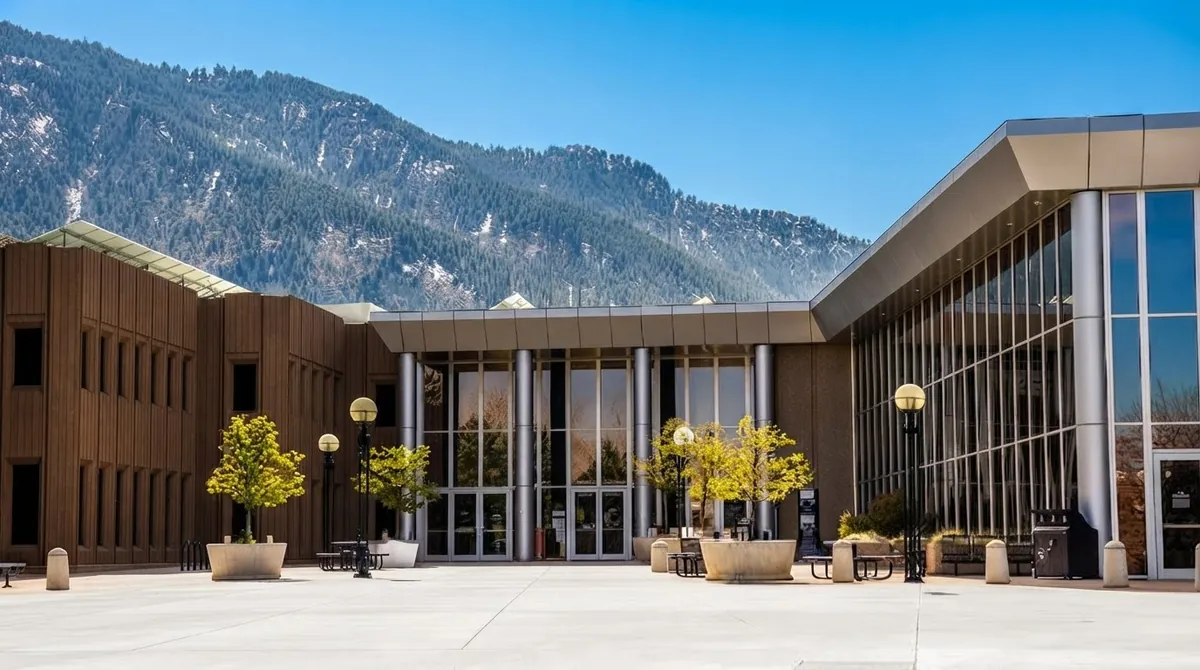
Court records in Boulder County, Colorado are maintained by the clerk of the combined court and can be accessed through several channels. BoulderCourt.us can help you find publicly available court record information for Boulder County. You can also search records through the Colorado Judicial Branch portal, visit the clerk's office in person, or submit a written request. Additional government resources — including the county recorder, sheriff's office, and state agencies — offer related public records.
Boulder County Court System Overview
Boulder County is part of Colorado's 20th Judicial District, which serves Boulder County exclusively. The court operates as the Boulder County Combined Court, meaning the district court and county court share the same facility and administrative structure. District court judges hear felony cases, higher-value civil disputes, and appeals from county court, while county court judges handle misdemeanors, traffic offenses, small claims, and lower-value civil matters. The courthouse is located at:
A satellite office also operates in Longmont where filings may be dropped off. Court hours are generally Monday through Friday, 8:00 a.m. to 5:00 p.m., though it is advisable to confirm hours before visiting.
Courts Serving Boulder County
| Court | Address | Phone |
|---|---|---|
| Boulder County Combined Court (District & County) | 1777 6th Street, Boulder, CO 80302 | 303-441-3750 |
| U.S. District Court, District of Colorado | Alfred A. Arraj United States Courthouse, 901 19th Street, Denver, CO 80294 | 303-844-3433 |
| U.S. Bankruptcy Court, District of Colorado | 721 19th Street, Denver, CO 80202 | 720-904-7300 |
| Boulder Municipal Court | 1777 6th Street, Boulder, CO 80302 | 303-441-1523 |
| Longmont Municipal Court | 350 Kimbark Street, Longmont, CO 80501 | 303-651-8617 |
| Louisville Municipal Court | 749 Main Street, Louisville, CO 80027 | 303-335-4560 |
| Lafayette Municipal Court | 451 N. 111th Street, Lafayette, CO 80026 | 303-665-5588 |
Federal cases involving Boulder County residents — including federal criminal matters and civil suits — are filed in the U.S. District Court for the District of Colorado in Denver. Federal bankruptcy petitions are handled at the U.S. Bankruptcy Court in Denver.
What Types of Cases Boulder County Courts Hear
Boulder County courts handle a broad range of case types across the district and county court divisions:
- Criminal: Felonies, misdemeanors, petty offenses, DUI/DWAI
- Traffic: Infractions, careless driving, driving under restraint
- Civil: Lawsuits, contract disputes, personal injury, debt collection
- Small claims: Disputes up to the statutory dollar limit
- Family law: Divorce, legal separation, custody, child support, paternity, protection orders
- Probate: Decedent estates, guardianships, conservatorships, trust matters
- Juvenile: Delinquency proceedings, child protective (dependency and neglect) cases
- Mental health: Involuntary commitment proceedings
- Appeals: County court decisions appealed to district court
District Court Cases in Boulder County
The district court division of the Boulder County Combined Court has jurisdiction over felony criminal cases, civil cases where the amount in controversy exceeds $25,000, domestic relations matters, probate, juvenile proceedings, and mental health cases. Felony cases typically arrive at district court after a preliminary hearing or grand jury indictment. Civil cases are initiated by filing a complaint with the clerk of court. Cases are assigned to individual judges, and proceedings follow the Colorado Rules of Civil or Criminal Procedure. District court also hears appeals from county court decisions, which are reviewed on the existing record rather than through a new trial.
Magistrate Court Cases in Boulder County
In Colorado, the county court division functions similarly to what other states call magistrate court. The Boulder County Court has original jurisdiction over misdemeanors, petty offenses, and traffic cases. It also handles civil cases where the amount in dispute is $25,000 or less, and small claims cases up to $7,500. County court judges preside over DUI and DWAI arraignments and hearings, preliminary hearings in felony cases (before bindover to district court), and most traffic violations. Due to caseload volume, specific judges or magistrates may be assigned to particular dockets such as DUI or domestic violence matters.
Family Law, Probate, and Juvenile Matters in Boulder County
Family law: Divorce, legal separation, allocation of parental responsibilities (custody), child support, paternity, and civil protection orders are handled by the district court division. Colorado uses the term "dissolution of marriage" rather than divorce. Historical divorce case files may also be available through the Colorado State Archives.
Probate: The district court handles decedent estates, guardianships, conservatorships, and trust disputes. Filings are made with the clerk of the combined court. Colorado follows the Uniform Probate Code, and many estates can be administered informally without a court hearing.
Juvenile: Juvenile delinquency cases under the Colorado Children's Code and dependency and neglect (child protective) cases are heard in district court. Juvenile court records are confidential under Colorado law and are not available through public docket searches. Contact the clerk's office at 303-441-3750 for questions about accessing juvenile records.
How Cases Move Through the Boulder County Court System
- Filing or initiation: A criminal case begins with a complaint or information filed by the district attorney. Civil cases start with a complaint and summons. Family and probate matters begin with a petition.
- Case assignment: The clerk assigns the case to a judge. In criminal matters, the defendant receives a summons or is arrested and brought before the court.
- Initial hearing: Criminal defendants appear for arraignment, where charges are read and a plea is entered. Civil cases typically have an initial status or scheduling conference.
- Pre-trial phase: Both sides exchange information through discovery. Motions may be filed. In criminal cases, plea negotiations often occur during this stage.
- Trial or resolution: Cases proceed to a bench or jury trial, or are resolved through a plea agreement, settlement, or default judgment.
- Post-judgment: Criminal cases move to sentencing. Civil judgments may be enforced or appealed. Appeals from county court go to district court; appeals from district court go to the Colorado Court of Appeals.
Court Administration, Local Rules, and Public Access in Boulder County
The 20th Judicial District is administered by the chief judge and a trial court administrator. Day-to-day operations — including filing, scheduling, and records — are managed by the clerk of the combined court. For administrative questions, contact the Boulder County Combined Court at 303-441-3750.
Local rules: The 20th Judicial District publishes local practice standards that supplement the statewide Colorado Rules of Civil and Criminal Procedure. These are available through the Colorado Judicial Branch website.
Public access to records: Most court records in Colorado are presumed open to the public under Chief Justice Directive 05-01 and the Colorado Open Records Act (CORA). However, certain records are restricted, including:
- Juvenile case files
- Sealed records (including sealed arrest records)
- Mental health proceedings
- Adoption records
- Records restricted by court order
You can search court dockets online through the Colorado Judicial Branch docket search. To request copies of documents from a case file, use the Record/Document Request Form or email the clerk's office. You may also drop off requests in person at the Boulder or Longmont locations.
Attending hearings: Court hearings in Boulder County are generally open to the public. Some proceedings may be available via remote access or livestream — check the Colorado Judicial Branch courts and records page for current livestream options.
Court Records and Related Court Resources in Boulder County
- Court docket search: Use the Colorado Judicial Branch docket search to look up case information by party name, case number, or attorney for Boulder County cases.
- Court records requests: Submit a Record/Document Request Form to obtain copies of filings, orders, or other documents from a Boulder County case.
- Recorded documents (deeds, liens, plats): The Boulder County Clerk & Recorder's public records search covers real estate documents, deeds of trust, liens, and subdivision plats.
- Boulder County open records: The county's open records page explains how to submit requests under CORA for county government records.
- Jail booking and listing reports: The Boulder County Sheriff's Office publishes daily booking and listing reports showing individuals currently held at the Boulder County Jail.
- Sheriff's Office records: To request incident reports, mugshots, or body-worn camera footage, submit a request through the Sheriff's Office Records Section or call 303-441-3600.
- City of Boulder police records: For crime reports from the Boulder Police Department, contact the City of Boulder Records Unit at 303-441-4330.
- Criminal background checks: The Colorado Bureau of Investigation processes state criminal history checks, court-ordered record sealings, and fingerprint-based background checks.
- Vital records (birth, death, marriage, divorce verification): The Colorado Department of Public Health and Environment issues certified copies of birth and death certificates and verifications of marriage and divorce. Marriage licenses in Boulder County are issued by the Recording Division of the Clerk & Recorder.
- Property records and tax information: The Boulder County Assessor's Office maintains property valuations and ownership data. For tax payment information, visit the Boulder County Treasurer.
- Court self-help resources: The Colorado Judicial Branch offers forms, instructions, and self-help guides through its website for individuals representing themselves in court.